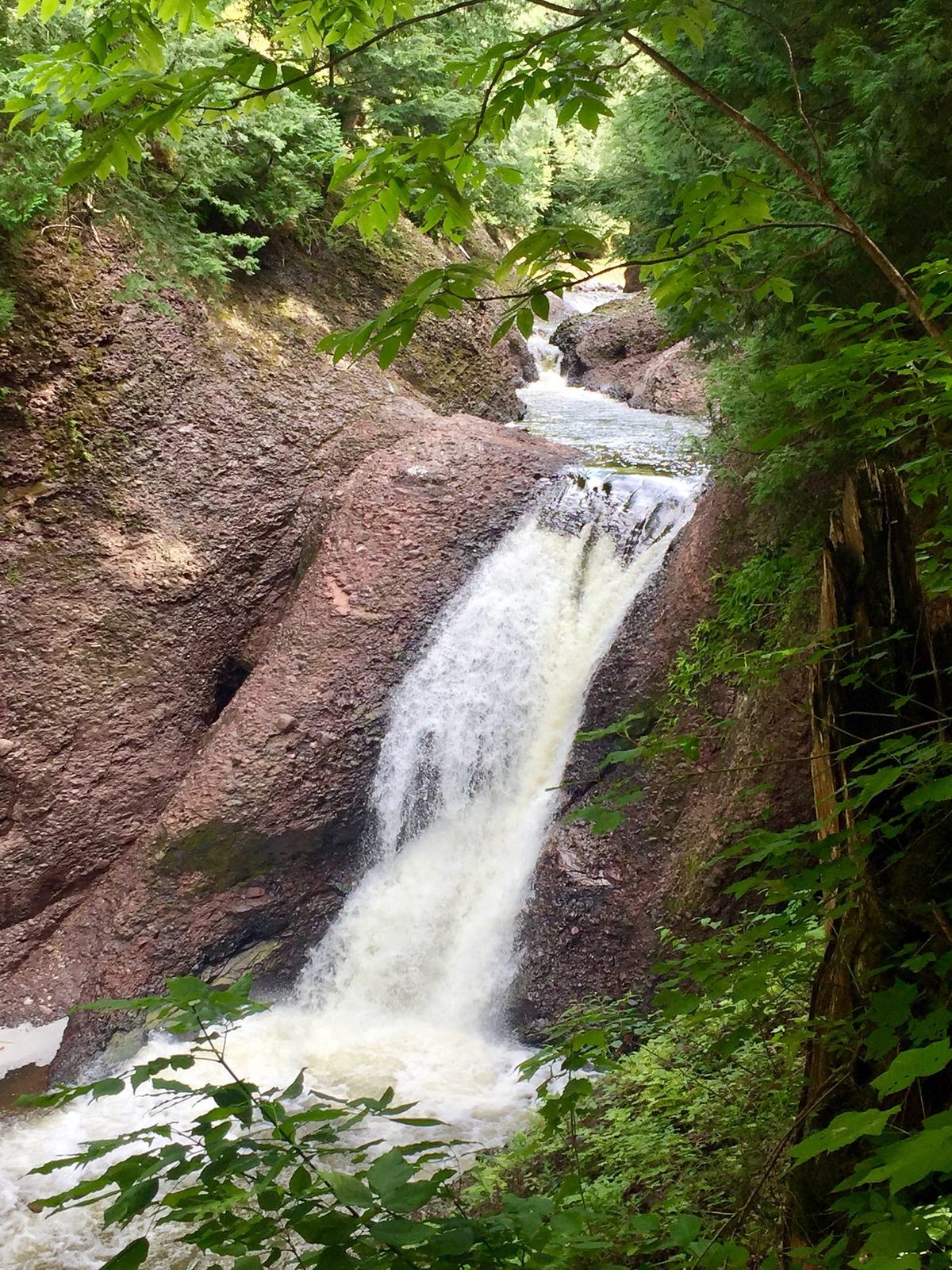
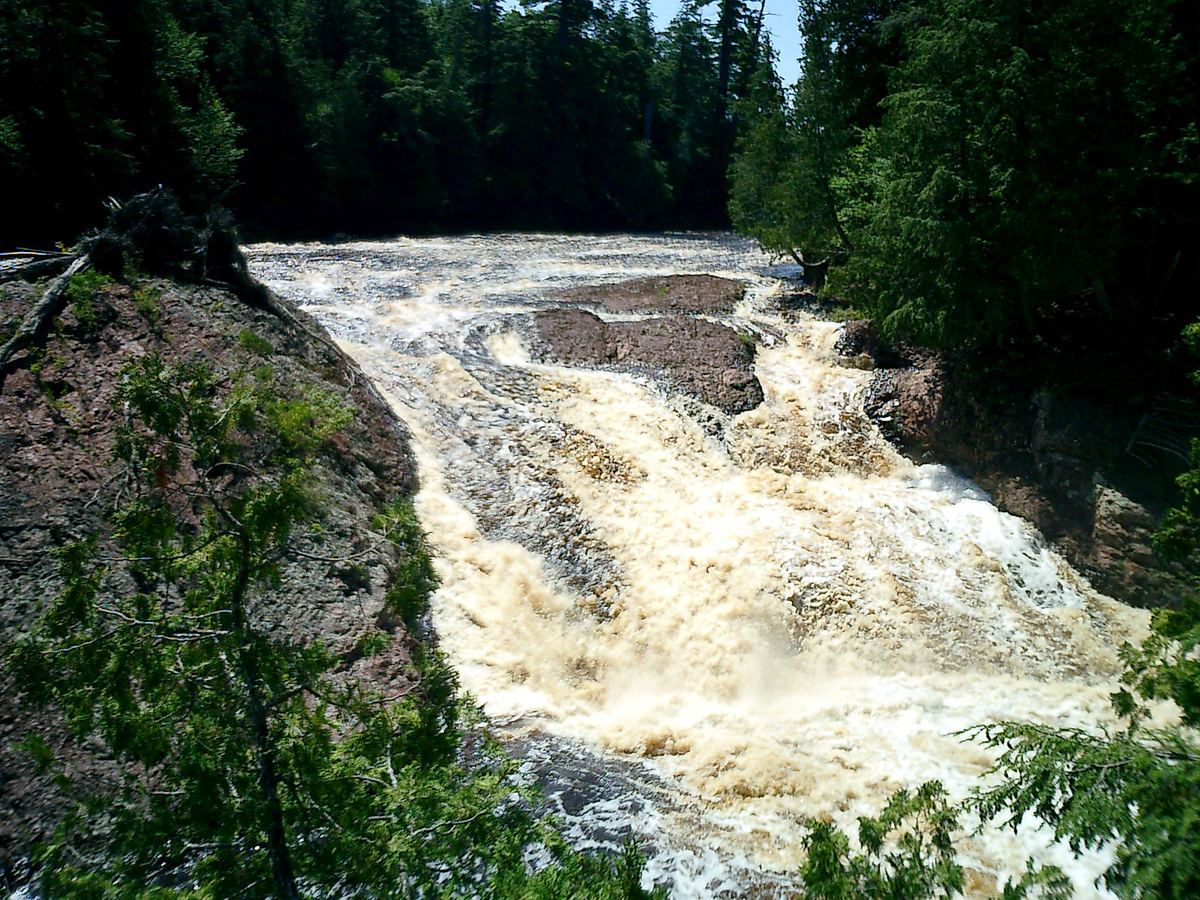
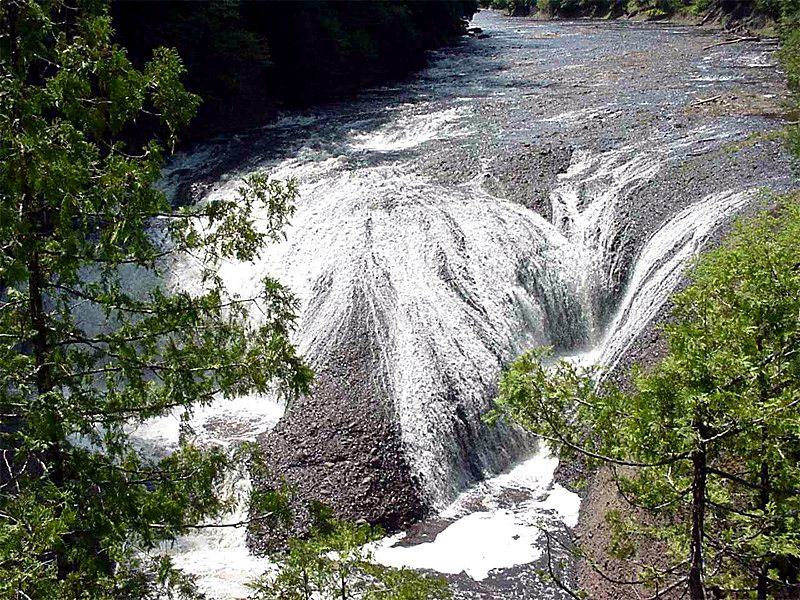
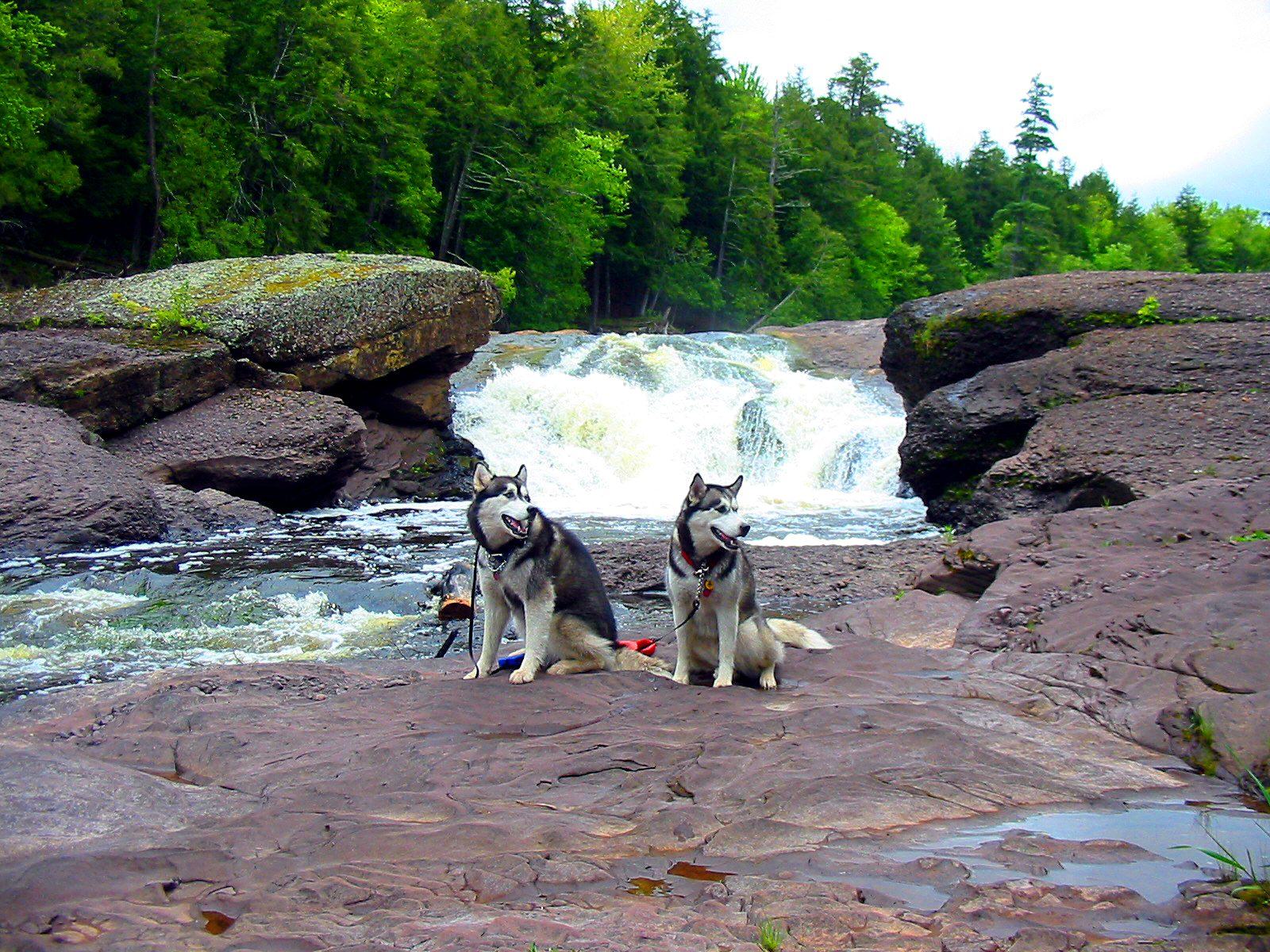
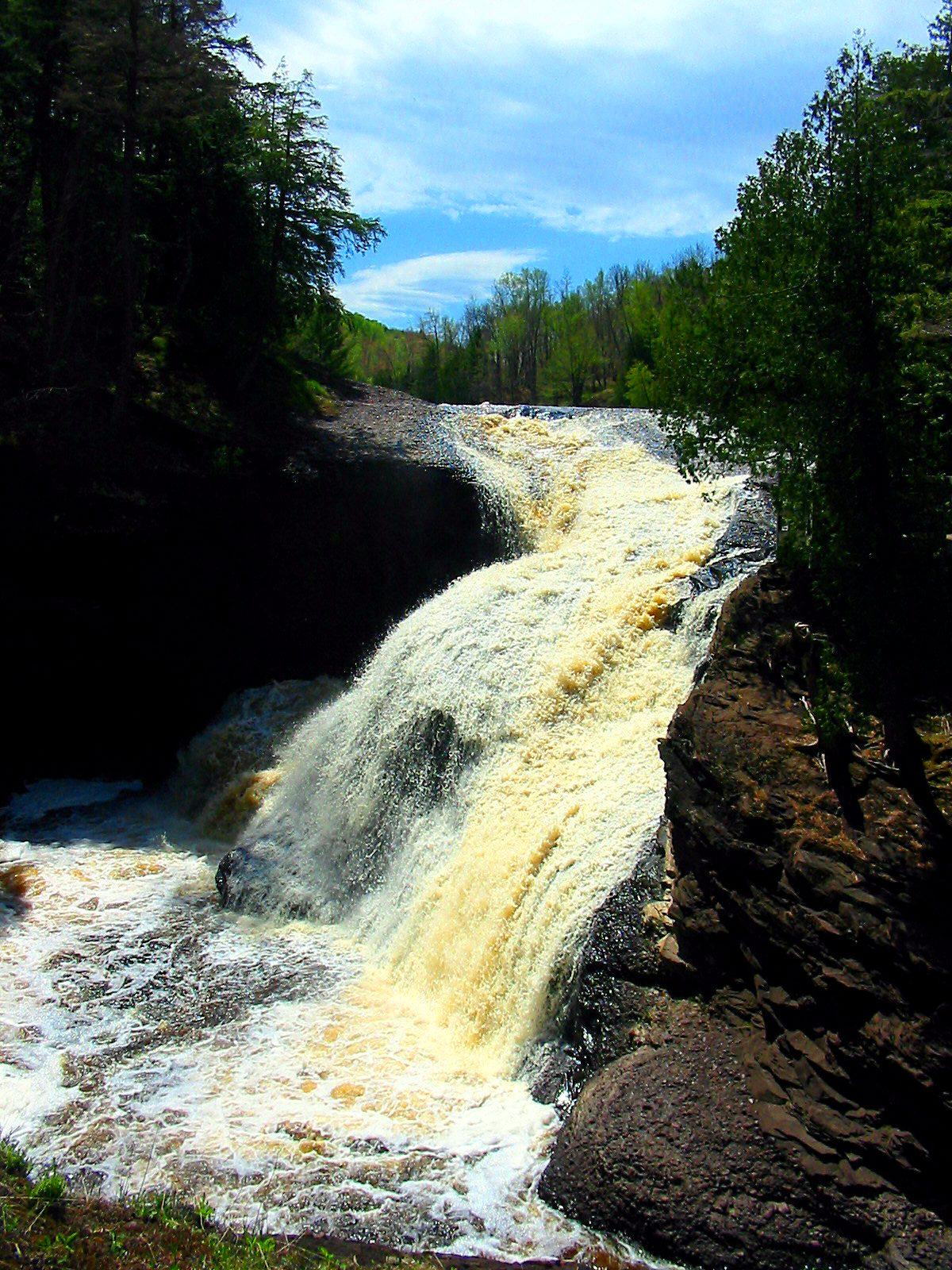
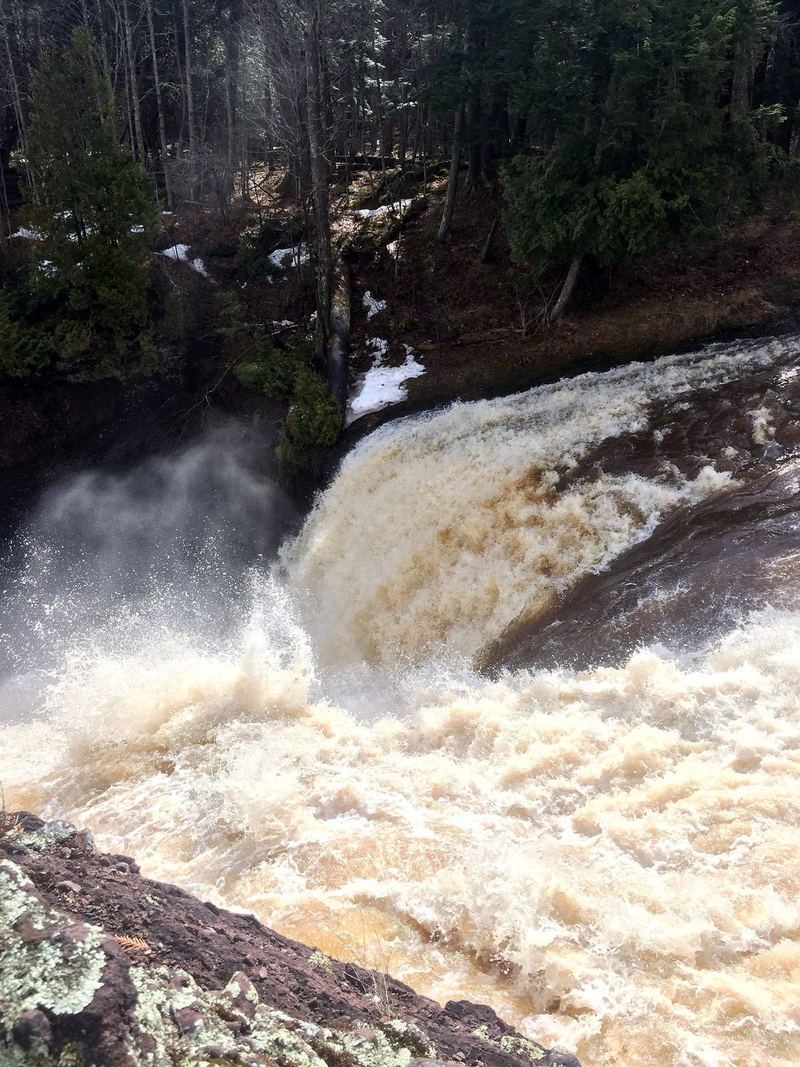
Rivers in the western U.P. drop off an ancient ridge of volcanic rock on their way to Lake Superior, and nearly every one of them breaks into falls somewhere along the way. From Big Powderhorn you can reach five named falls in a single morning on the Black River, three more on the Presque Isle River in the Porcupine Mountains, and a handful of others worth the drive.
Quick answer: Five named waterfalls line the last five miles of the Black River above Lake Superior, each a short forest walk from the Black River Scenic Byway: Great Conglomerate, Potawatomi, Gorge, Sandstone and Rainbow Falls. They are about 20 minutes from Big Powderhorn.
Year-roundtrailheads stay open, with reduced winter services
Black River Scenic Byway · County Road 513
The five falls of the Black River
All five are signed trailheads off County Road 513, the 11-mile Black River Scenic Byway that runs north from the edge of the Big Powderhorn Village to Lake Superior. Most of the trails use long wooden stairways into the gorge, so budget about an hour for two or three falls, and a half day for all five.
Falls01
The first stop on the byway
Great Conglomerate Falls
The river splits around a block of conglomerate rock and comes back together below it. It’s the longest walk of the five, about three-quarters of a mile each way, and in spring high water the roar fills the whole valley.
Falls02
Barrier-free viewing platform
Potawatomi Falls
A wide curtain of water, and the easiest falls to see: a paved, barrier-free path leads to the first platform. Stairs continue down to more views and to Gorge Falls just downstream.
Falls03
Short walk from Potawatomi
Gorge Falls
The river squeezes through a narrow slot and drops into a deep, shaded gorge. Pair it with Potawatomi, as they share a trailhead.
Falls04
Red rock channels
Sandstone Falls
The water braids through channels it has carved in red sandstone. A steep stairway takes you down to the river’s edge, where the rock is fun to explore in low water.
Falls05
Nearest the harbor
Rainbow Falls
The last falls before Lake Superior, deep in a forested gorge. On sunny days the spray throws a rainbow. You can also see it from the far bank by crossing the harbor’s suspension bridge and following the North Country Trail.
Before you go: Black River Harbor is a national forest recreation area with a day-use fee, and Forest Service and interagency passes are accepted. For trail-by-trail detail, see the Black River Scenic Byway guide.
Porcupine Mountains Wilderness State Park
The Presque Isle River falls
About an hour from Big Powderhorn, by way of Wakefield and County Road 519, the Presque Isle River tumbles over three named falls in its last mile before Lake Superior: Nawadaha, Manido and Manabezho. A loop trail follows both banks, with boardwalks, viewing decks and a footbridge near the river mouth.
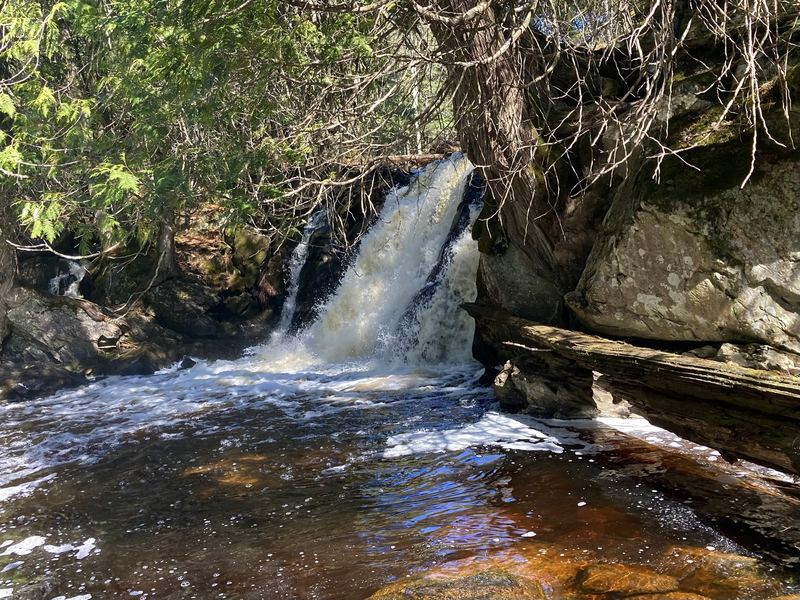
The river is dark with tannin from the cedar swamps upstream and runs a root-beer color over pale rock. Look for potholes ground into the riverbed by swirling stones. Stay on the trail and off the rocks: the current here is strong and the rock is slick.
The falls are inside the state park, so a Michigan Recreation Passport is required for your vehicle. Make a day of it: the Lake Superior beach at the river mouth is a great place for lunch. Porcupine Mountains guide →
Tannin-brown water below a western U.P. falls
Worth the drive
More falls farther afield
Drive times are approximate, from the Big Powderhorn Village.
Superior Falls · about 25 minutes
The Montreal River, the Michigan–Wisconsin border, drops into a steep red-rock gorge just above Lake Superior. A short trail leads to an overlook. Combine it with Little Girl’s Point for an easy half day.
Bond Falls · about 1¼ hours
One of the most photographed falls in the U.P., a wide, many-stepped cascade on the Middle Branch of the Ontonagon River near Paulding. A boardwalk and paths circle the falls.
Agate Falls · about 1½ hours
A broad falls on the Middle Branch of the Ontonagon near Trout Creek, viewed from a short trail below an old railroad trestle that now carries a recreation trail.
O Kun de Kun Falls · about 1½ hours
A quieter falls on the North Country Trail north of Bruce Crossing, reached by an easy forest walk of a little over a mile and a footbridge.
Make the most of it
Waterfall tips by season
Spring
Snowmelt turns every river into a torrent from April into May. It’s the loudest, most dramatic time to visit, but trails can be muddy and stairways wet.
Summer
Lower water opens up the rock shelves, the forest is deep green and the light under the cedars is soft. Go early or late in the day for the best photos and the fewest people.
Fall
Peak color usually lands in late September and early October, and the falls frame it beautifully. Pair the Black River falls with a sunset at the harbor.
Winter
The gorges fill with deep lake-effect snow and the falls build ice. The trailheads stay open with reduced services, though plowing can limit parking. Snowshoes are a must, and the stairways can be icy.
What are the best waterfalls near Ironwood, Michigan?
The five Black River falls (Great Conglomerate, Potawatomi, Gorge, Sandstone and Rainbow) are about 20 to 30 minutes from Ironwood on the Black River Scenic Byway. Superior Falls on the Montreal River is about 20 minutes north, and the Presque Isle River falls in the Porcupine Mountains are about an hour.
Which waterfall is easiest to reach?
Potawatomi Falls on the Black River has a paved, barrier-free path to its first viewing platform. Gorge Falls is a short walk farther down the same trail.
Can you see all five Black River falls in one day?
Yes. They are all within the last few miles of the byway before Black River Harbor. Allow about a half day to walk to all five at a relaxed pace, then finish at the harbor beach.
Do I need a pass to visit the waterfalls?
Black River Harbor and its trailheads are in the Ottawa National Forest, which charges a day-use fee and accepts Forest Service and interagency passes. The Presque Isle River falls are in Porcupine Mountains Wilderness State Park, which requires a Michigan Recreation Passport.
When is the best time to see the waterfalls?
Spring snowmelt brings the highest water, usually in April and May. Fall color peaks in late September and early October. Summer has the easiest trail conditions, and winter brings ice formations for snowshoers.